


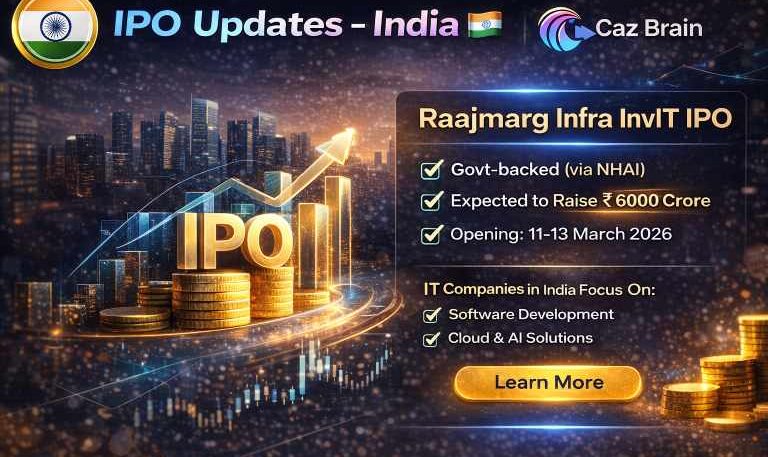
This essential guide delivers the latest IPO updates India for 2026 including GMP trends, allotment dates, and subscription analysis. Covering Tata Technologies IPO allotment date results and Hexaware Technologies IPO GMP performance, it maps upcoming IPO 2026 India opportunities with real data, comparison tables, and expert tips for the Indian stock market IPO landscape.
IPO Updates India: Essential Guide to GMP, Allotment Dates and Analysis for 2026
IPO updates India are critical for every investor navigating the world’s fastest-growing primary market in 2026. Whether you are tracking the Tata Technologies IPO allotment date, analyzing the Hexaware Technologies IPO GMP, checking IPO subscription status live, or researching the best IPO to invest India this year, this comprehensive pillar guide delivers verified data, comparison tables, and actionable analysis. India’s primary market set a record with 371 public issues in 2025, compared to 332 IPOs in 2024 and 240 in 2023. Total funds raised crossed ₹1.75 lakh crore (approximately USD 21 billion) for the calendar year alone. Furthermore, over 84 companies have already received SEBI approval to collectively raise ₹1.14 lakh crore, while another 108 companies await regulatory clearance with projected fundraising of ₹1.46 lakh crore. This confirms that the Indian stock market IPO pipeline for 2026 is exceptionally robust and filled with opportunities. At Caz Brain, an IIT Patna incubated digital transformation company, we track the latest IPO news India closely because India’s booming tech IPO landscape directly intersects with the digital ecosystem we power. Our expertise in software development and artificial intelligence services helps businesses build the technology foundations that today’s IPO-bound companies rely on.
Understanding IPO GMP, Allotment and Key Terminology for Indian Investors
Before exploring specific IPO updates India data, every investor must understand the core concepts that govern IPO participation. This knowledge separates informed investors from those who simply follow grey market hype without understanding the mechanics.
What Is IPO GMP Today and How Does the Grey Market Work?
IPO GMP today represents the premium at which IPO shares trade in the unofficial grey market before official listing on BSE and NSE. For example, if an IPO has a price band of ₹500 and a GMP of ₹100, the expected listing price would be approximately ₹600. However, grey market activity operates outside SEBI’s regulatory oversight and is highly volatile. GMP can swing dramatically within hours based on market sentiment, rumors, and speculative demand. Therefore, IPO GMP today should never be your sole investment criterion when evaluating the latest IPO news India.
Why GMP Alone Is an Unreliable Investment Indicator
The Hexaware Technologies IPO proved this clearly. Despite near-zero GMP before listing, shares opened at ₹745.50, delivering a 5.30% premium over the ₹708 issue price. Conversely, some IPOs with high GMP have listed below expectations. Investors who chase GMP without examining financial fundamentals, revenue growth, debt levels, and competitive positioning often face disappointing results. Always combine IPO GMP today analysis with thorough fundamental research before committing capital.
Where to Track Reliable GMP Data
Platforms like InvestorGain, IPO Watch, and IPO Central aggregate grey market data from unofficial market sources. These are informational platforms only and do not participate in grey market trading. Cross-reference GMP data from multiple sources and treat it as one input among many in your IPO updates India analysis toolkit.
How IPO Allotment Works in India and What Investors Should Expect
IPO allotment status determination follows SEBI’s ICDR regulations strictly. SEBI classifies investors into four categories: Qualified Institutional Buyers (QIBs) who receive 50% allocation, Non-Institutional Investors (NIIs/HNIs) who receive 15%, Retail Individual Investors (RIIs) who receive 35%, and Anchor Investors who commit before the public subscription window opens. In oversubscribed IPOs, retail allotment happens through a computerized lottery system managed by the designated IPO registrar.
SEBI’s Framework for Protecting Retail IPO Investors
SEBI mandates minimum three-day subscription windows, detailed prospectus disclosures through DRHP and RHP filings, and strict monitoring of how companies use the funds raised. The ASBA (Application Supported by Blocked Amount) mechanism ensures your funds are only blocked in your bank account and not debited until allotment confirmation. This protects retail investors from cash flow disruption during the application period. These protections make the Indian stock market IPO process among the most investor-friendly globally.
Typical Allotment Timeline After IPO Subscription Closes
The basis of allotment is typically finalized within 5–6 working days after the IPO subscription window closes. Shares are then credited to your demat account the following business day. Refunds for unsuccessful applicants are initiated simultaneously through ASBA unblocking. Listing on BSE and NSE usually happens within 6–7 working days after the subscription closes.
Essential IPO Terminology Every Investor Must Know
| Term | Definition |
|---|---|
| DRHP | Draft Red Herring Prospectus — preliminary IPO document filed with SEBI before approval |
| RHP | Red Herring Prospectus — final document with confirmed dates, pricing, and disclosures |
| OFS | Offer for Sale — existing shareholders selling their shares to the public |
| Fresh Issue | New equity shares issued by the company to raise growth capital |
| ASBA | Application Supported by Blocked Amount — funds blocked but not debited until allotment |
| Cut-Off Price | Upper limit of price band; retail investors typically bid at this level |
| Lot Size | Minimum number of shares an investor must apply for per application |
| Oversubscription | Total bids exceeding shares offered, expressed as a multiple (e.g., 69.43x) |
| Basis of Allotment | Official document finalizing share distribution among all applicants |
Tata Technologies IPO: Complete Allotment Date, Subscription and Performance Analysis
The Tata Technologies IPO allotment date became one of the most searched financial terms in late 2023. As the first Tata Group IPO in nearly two decades since TCS listed in 2004, it generated extraordinary investor excitement across all categories. Understanding this landmark IPO provides valuable lessons for every IPO updates India follower evaluating future opportunities.
Tata Technologies IPO Complete Data Table
| Parameter | Verified Details |
|---|---|
| Company | Tata Technologies Limited (Tata Group subsidiary) |
| Issue Open Date | November 22, 2023 |
| Issue Close Date | November 24, 2023 |
| Price Band | ₹475 – ₹500 per share |
| Lot Size | 30 shares (minimum investment ₹15,000) |
| Total Issue Size | ₹3,042.51 crore (entirely Offer for Sale) |
| Allotment Date | November 28, 2023 |
| Listing Date | November 30, 2023 |
| Listing Exchange | BSE and NSE |
| Total Subscription | 69.43 times oversubscribed |
| QIB Subscription | 203.41 times |
| NII Subscription | 62.11 times |
| Retail Subscription | 16.50 times |
| Employee Subscription | 3.70 times |
| Shareholder Quota | 29.19 times |
| Pre-Listing GMP | Approximately ₹375 per share |
| Registrar | Link Intime India Pvt Ltd |
| Lead Managers | JM Financial, Citigroup, BofA Securities |
What Made the Tata Technologies IPO a Landmark Event
Tata Technologies is a global engineering services company offering product development and digital solutions to automotive, aerospace, and industrial OEMs. The iconic “Tata” brand carried immense investor confidence built over decades of corporate governance excellence. Additionally, the company’s leadership position in electric vehicle technology, autonomous driving systems, and Industry 4.0 digital twins made it exceptionally attractive for technology-focused investors searching for the best IPO to invest India at that time.
Subscription Breakdown and Category-Wise Investor Demand
The IPO was subscribed 69.43 times overall, making it one of the most oversubscribed mainboard IPOs of 2023. QIBs including mutual funds and foreign portfolio investors subscribed over 203 times their allocation, demonstrating massive institutional confidence. Retail investors subscribed 16.50 times, meaning the probability of individual retail allotment was very low. The shareholder quota reserved for Tata Motors shareholders was subscribed 29.19 times, proving that even dedicated category investors faced intense competition for shares.
Post-Listing Performance and Long-Term Investor Lessons
Tata Technologies shares listed at a significant premium on November 30, 2023, rewarding the fortunate investors who received allotment through the lottery. The stock became a benchmark for how strong brand equity combined with solid business fundamentals creates extraordinary primary market demand in the Indian stock market IPO ecosystem. Investors tracking IPO subscription status live during those three days witnessed unprecedented real-time demand figures that made headlines across every financial platform.
Hexaware Technologies IPO: GMP Trend Analysis and Subscription Review
The Hexaware Technologies IPO GMP generated significant market discussion as one of the largest technology sector IPOs of early 2025. Backed by Carlyle Group’s CA Magnum Holdings, this AI-focused IT services company returned to public markets after being voluntarily delisted from BSE and NSE in 2020. The latest IPO news India coverage of Hexaware provided contrasting lessons compared to Tata Technologies.
Hexaware Technologies IPO Complete Data Table
| Parameter | Verified Details |
|---|---|
| Company | Hexaware Technologies Limited (Carlyle-backed) |
| Issue Open Date | February 12, 2025 |
| Issue Close Date | February 14, 2025 |
| Price Band | ₹674 – ₹708 per share |
| Lot Size | 21 shares (minimum investment ₹14,868) |
| Total Issue Size | ₹8,750 crore (entirely Offer for Sale) |
| Allotment Date | February 17, 2025 |
| Listing Date | February 19, 2025 |
| Listing Exchange | BSE and NSE |
| Total Subscription | 2.05 times oversubscribed |
| QIB Subscription | 5.13 times |
| NII Subscription | 0.08 times |
| Retail Subscription | 0.08 times |
| Employee Subscription | 0.22 times |
| Pre-IPO GMP Range | ₹2 to ₹20 (highly volatile) |
| Listing Price | ₹745.50 (+5.30% over issue price) |
| Current Trading Price | Approximately ₹680 (as of latest data) |
| Registrar | KFin Technologies Ltd |
| Lead Managers | Kotak, Citigroup, JP Morgan, HSBC, IIFL |
GMP Trend and What It Revealed About Market Sentiment
The Hexaware Technologies IPO GMP peaked at approximately ₹20 before the issue opened for subscription, then declined steadily to ₹2–₹5 during the three-day window. By listing day, GMP was essentially flat at ₹0. This muted grey market sentiment reflected several converging factors including the entirely OFS nature meaning no fresh capital would flow into the company, the massive ₹8,750 crore issue size that absorbed significant market liquidity, and broader volatility in the Indian equity markets during that period.
Why Retail Investors Largely Avoided This IPO
Retail subscription stood at just 0.08 times, meaning the retail category was barely subscribed. This was a stark contrast to the Tata Technologies experience. The IPO GMP today signals before Hexaware’s listing day were consistently weak, discouraging retail participation. However, QIBs subscribed 5.13 times, indicating that institutional investors with deeper fundamental analysis capabilities recognized the value that retail sentiment missed.
The Critical Lesson: GMP Does Not Equal Listing Performance
Despite near-zero GMP, Hexaware listed at ₹745.50, a positive 5.30% premium over the ₹708 issue price. This single data point proves conclusively that IPO GMP today is an unreliable standalone predictor. Brokerages including Anand Rathi, SBI Securities, and Geojit Financial had recommended the issue for long-term subscription based on Hexaware’s 13.7% revenue CAGR over CY21-23, AI-driven service portfolio, and diversified exposure across 31 Fortune 500 clients.
Head-to-Head Comparison: Tata Technologies vs Hexaware Technologies IPO
This comparison table helps IPO updates India followers understand how two technology-sector IPOs delivered vastly different investor experiences based on brand perception, issue sizing, timing, and subscription dynamics.
| Comparison Parameter | Tata Technologies | Hexaware Technologies |
|---|---|---|
| IPO Year | November 2023 | February 2025 |
| Issue Size | ₹3,042.51 Cr | ₹8,750 Cr |
| Price Band | ₹475 – ₹500 | ₹674 – ₹708 |
| Issue Type | Entirely OFS | Entirely OFS |
| Overall Subscription | 69.43x | 2.05x |
| QIB Demand | 203.41x | 5.13x |
| Retail Demand | 16.50x | 0.08x |
| Pre-Listing GMP | ~₹375 | ~₹0–₹5 |
| Listing Premium | Significant gains | +5.30% |
| Promoter | Tata Motors (Tata Group) | CA Magnum Holdings (Carlyle) |
| Core Business | Engineering R&D, automotive IT | AI-driven IT services, digital transformation |
| Employee Discount | None | ₹67 per share |
| Market Mood | Extremely bullish | Cautiously positive |
| Key Takeaway | Brand + pent-up demand = massive oversubscription | Strong fundamentals can overcome weak GMP |
This comparison demonstrates that investors seeking the best IPO to invest India must evaluate multiple dimensions beyond a single metric like GMP or subscription numbers.
Most Awaited Upcoming IPOs in India for 2026
The upcoming IPO 2026 India pipeline features some of the nation’s most recognized brands preparing to enter public markets. According to publicly available data, 84 companies hold SEBI approval to raise ₹1.14 lakh crore while 108 more await clearance for ₹1.46 lakh crore in potential fundraising.
Upcoming IPO 2026 Pipeline: Major Listings Expected
| Company | Expected Timeline | Est. Issue Size | Sector | Current Status |
|---|---|---|---|---|
| Reliance Jio Platforms | H1 2026 | USD 10B+ (₹85,000+ Cr) | Telecom/Digital | DRHP preparation; awaiting SEBI norms |
| Flipkart (Walmart-backed) | 2026 | USD 5–7B | E-Commerce | Reverse flip to India completed |
| PhonePe | H1 2026 | ₹11,000–13,000 Cr | Digital Payments | Confidential DRHP filed; SEBI approved |
| NSE (National Stock Exchange) | 2026 | ~₹47,500 Cr | Financial Infrastructure | Awaiting SEBI NOC |
| Zepto | H2 2026 | ~₹11,000 Cr | Quick Commerce | Board approved; confidential DRHP filed |
| SBI Mutual Fund | H1 2026 | ~USD 1.2B | Asset Management | Planning stage |
| boAt (Imagine Marketing) | 2026 | ₹1,500 Cr | Consumer Electronics | SEBI approved October 2025 |
| Hero FinCorp | 2026 | ₹3,668 Cr | NBFC/Lending | DRHP filed with SEBI |
| Bharat Coking Coal | Q1 2026 | ~₹1,300 Cr | Mining/Coal | OFS approved; first mainboard 2026 |
These upcoming IPO 2026 India listings span telecom, fintech, e-commerce, asset management, and consumer sectors, offering diverse opportunities for retail and institutional investors. Every investor tracking IPO updates India should monitor SEBI filing statuses and official DRHP announcements for confirmed dates and price bands.
Reliance Jio: India’s Potential Record-Breaking Mega Listing
Reliance Jio Platforms could become India’s largest-ever IPO with an estimated valuation of up to USD 170 billion. Reliance Industries Chairman Mukesh Ambani indicated the listing is targeted for the first half of 2026. The company is currently preparing its DRHP while awaiting final government notifications regarding new SEBI recommendations for large-cap IPOs. This single listing could reshape the entire Indian stock market IPO landscape for years to come.
Why Every Investor Should Prepare Early for Jio IPO
Given the expected massive demand, retail investors should ensure their demat accounts are active, bank accounts have sufficient ASBA-eligible balances, and UPI mandates are properly configured well before the subscription window opens. The Tata Technologies experience showed how quickly oversubscription can make retail allotment extremely competitive.
PhonePe and Flipkart: Digital Economy Giants Entering Public Markets
PhonePe, India’s dominant UPI payment platform with over 40% market share, has filed a confidential DRHP with SEBI and is targeting a USD 1.5 billion fundraise at approximately USD 15 billion valuation. Flipkart, the Walmart-owned e-commerce giant, has completed its reverse flip to India and is eyeing a domestic listing at USD 60–70 billion valuation. Both represent landmark upcoming IPO 2026 India opportunities that validate India’s position as a global digital economy powerhouse. These are exactly the kinds of technology platforms that companies like Caz Brain help businesses build through our ecommerce app development and app development services.
How to Check IPO Allotment Status Online in India: Complete Step-by-Step Guide
Knowing how to check IPO allotment status is essential after every subscription. The process is completely free and takes less than two minutes. Here are the three verified methods available to every retail investor.
Method 1: Check Through the IPO Registrar Website
Every IPO has a designated registrar responsible for processing applications and finalizing allotment. For Tata Technologies, the registrar was Link Intime India. For Hexaware Technologies, it was KFin Technologies. Visit the official registrar website, select the IPO name from the dropdown menu, enter your PAN number or application number, and click submit. Your IPO allotment status will display instantly showing the number of shares applied for and the number allotted. Always verify you are using the official registrar URL to avoid phishing websites that mimic legitimate portals.
Method 2: Check Through BSE Official Website
Visit the BSE IPO allotment status page at bseindia.com. Select “equity” as the issue type, choose the specific company name from the available list, enter your application number or PAN, and submit. Your allotment details including shares applied, shares allotted, and refund status appear immediately. This is a completely official and reliable source for IPO allotment status verification.
Method 3: Check Through Your Broker’s App or Platform
Modern brokers including Zerodha, Groww, Upstox, Angel One, and 5Paisa display IPO allotment status directly within their mobile app or web platform under the IPO section. This is typically the simplest and fastest method for retail investors who applied through their brokerage account using UPI mandate.
What Happens If You Do Not Receive IPO Allotment
If your status shows “not allotted,” your ASBA-blocked funds are automatically unblocked and released back to your bank account within 1–2 business days. No manual intervention is required. You can immediately redirect those funds toward the next IPO opportunity or other investment options.
7 Expert Tips for Finding the Best IPO to Invest in India
These proven strategies help both beginners and experienced investors navigate the Indian stock market IPO ecosystem and identify the best IPO to invest India opportunities with greater confidence.
Tip 1: Always Prioritize Company Fundamentals Over GMP Hype
Evaluate revenue growth trajectory, profit margins, debt-to-equity ratio, return on equity, and competitive moat before applying. The National Stock Exchange of India (NSE) publishes detailed financial disclosures for every listed entity. Always read the DRHP and RHP prospectus documents thoroughly before committing your capital to any IPO.
Tip 2: Understand Whether the Issue Is Fresh Capital or Promoter Exit
Fresh issues mean the company raises capital for business expansion, debt reduction, or R&D investment. OFS (Offer for Sale) means existing promoters or investors are selling their shares. A 100% OFS structure like both Tata Technologies and Hexaware means no new money enters the company. This distinction significantly impacts long-term value creation potential.
Identifying Red Flags in IPO Issue Structure
If a company raises fresh capital but allocates a large portion to debt repayment rather than growth investments, question whether the business fundamentals justify the IPO valuation. Use-of-proceeds details are always disclosed in the DRHP/RHP and should be carefully analyzed.
Tip 3: Monitor IPO Subscription Status Live Across All Categories
Track IPO subscription status live day-by-day on BSE and NSE websites. Strong QIB subscription on Day 1 signals institutional confidence backed by deep fundamental analysis. Robust Day 2 retail participation typically confirms broad-based demand. Weak Day 3 subscription across all categories is a warning signal that informed money may be staying away.
Best Time to Submit Your IPO Application
Apply on Day 1 or Day 2 of the subscription window. This gives you buffer time to resolve any UPI mandate approval delays or technical issues. Avoid waiting until the final hours of Day 3 as server congestion and UPI processing delays can cause failed applications.
Tip 4: Use Multiple Demat Accounts to Improve Allotment Chances
Apply through family members’ separate demat accounts (each linked to a unique PAN) to improve allotment probability in heavily oversubscribed IPOs. SEBI permits one application per PAN per IPO. Multiple applications from the same PAN will be automatically rejected and may delay refund processing.
Tip 5: Always Bid at Cut-Off Price for Maximum Allotment Chance
Retail investors who bid at the cut-off price indicate willingness to accept any price within the announced band. This maximizes allotment probability, especially in heavily oversubscribed upcoming IPO 2026 India offerings where demand far exceeds supply.
Tip 6: Evaluate Anchor Investor Lock-In Expiry Dates
Anchor investors receive shares before public subscription but face mandatory lock-in periods. Fifty percent of anchor shares unlock 30 days after listing, and the remaining 50% unlock after 90 days. When these lock-ins expire, increased selling pressure can temporarily depress stock prices. Smart investors use these dates as potential entry points for post-listing accumulation.
Tip 7: Build a Diversified IPO Portfolio Instead of Concentrating Capital
Never allocate your entire investment capital to a single IPO regardless of how promising it appears. Spread applications across multiple mainboard IPOs and carefully selected SME IPOs to diversify risk and improve overall portfolio returns. The IPO updates India landscape always offers multiple opportunities throughout the year.
How Caz Brain Technology Powers India’s Digital IPO Ecosystem
India’s thriving tech IPO pipeline validates the massive demand for digital products and platforms. Companies going public in AI, SaaS, fintech, e-commerce, and digital payments are building on the same technology stack that Caz Brain helps businesses create every day. As an IIT Patna incubated digital transformation company, we build the technology foundations that startups scale from MVP to IPO-readiness.
Our Technology Services That Build IPO-Ready Digital Products
Our artificial intelligence services power the kind of AI-driven platforms that today’s most valued tech companies are built on. Our app development services create mobile-first products that acquire millions of users. Our website development services build high-performance web platforms. Our ERP software development unifies business operations. Our digital marketing services drive the user acquisition and brand building that investors evaluate before backing a company.
Complete Caz Brain Services Ecosystem
Whether you need ecommerce app development, educational app development, student management systems, food delivery app development, game app development, or inventory management solutions, Caz Brain delivers the technology backbone that scales from startup to enterprise. Explore our portfolio, read client testimonials, and view all services. 📞 Phone: +918536097288 📍 Address: 12th Floor, Tower 2, Waterfall, Godrej Waterside, EN Block, Sector V, Bidhannagar, Kolkata, West Bengal 700091 🌐 Website: cazbraingroup.com
Frequently Asked Questions About IPO Updates India
1. What are the latest IPO updates India for 2026?
Caz Brain: India’s 2026 IPO market features mega listings from Reliance Jio, Flipkart, PhonePe, NSE, and Zepto. Over 84 companies hold SEBI approval to raise ₹1.14 lakh crore, while 108 more await clearance for ₹1.46 lakh crore. Manufacturing, fintech, quick-commerce, and telecom sectors dominate the upcoming IPO 2026 India calendar.
2. What was the Tata Technologies IPO allotment date and subscription?
Caz Brain: The Tata Technologies IPO allotment date was November 28, 2023. The IPO was subscribed 69.43 times overall with QIBs at 203.41 times, NIIs at 62.11 times, and retail at 16.50 times. It was the first Tata Group IPO in nearly 20 years and listed with significant premium gains on November 30.
3. What was the Hexaware Technologies IPO GMP and listing result?
Caz Brain: Hexaware Technologies IPO GMP ranged between ₹0 and ₹20, settling near zero by listing day. Despite flat GMP, shares listed at ₹745.50, a 5.30% premium over the ₹708 issue price. The IPO was subscribed 2.05 times, driven primarily by QIB demand at 5.13 times, proving GMP is not a reliable standalone indicator.
4. How can I check my IPO allotment status online?
Caz Brain: Check IPO allotment status through three methods: the IPO registrar’s website (KFin Technologies or Link Intime), the BSE official allotment page at bseindia.com, or your broker’s app such as Zerodha, Groww, Upstox, or Angel One. Enter your PAN or application number to view results instantly. The process is free.
5. Which are the most awaited upcoming IPOs in India 2026?
Caz Brain: The most awaited upcoming IPO 2026 India listings include Reliance Jio (potential valuation USD 170 billion), Flipkart (USD 60–70 billion), PhonePe (raising USD 1.5 billion), NSE (₹47,500 crore), Zepto (₹11,000 crore), SBI Mutual Fund (USD 1.2 billion), and boAt (₹1,500 crore).
6. Is IPO GMP today a reliable basis for investment decisions?
Caz Brain: No. IPO GMP today reflects unofficial grey market sentiment and is extremely volatile. It should never be your sole investment basis. Hexaware Technologies had near-zero GMP but listed at a 5.30% premium. Always evaluate company fundamentals including revenue growth, profitability, debt structure, and industry positioning alongside GMP trends.
7. How does SEBI protect retail investors in the IPO process?
Caz Brain: SEBI protects retail IPO investors through mandatory DRHP and RHP disclosures, fair pricing via book-building mechanisms, ASBA applications that block but never debit funds until allotment, strict fund utilization monitoring, lock-in periods for promoters and anchor investors, and minimum three-day subscription windows ensuring informed participation.
