


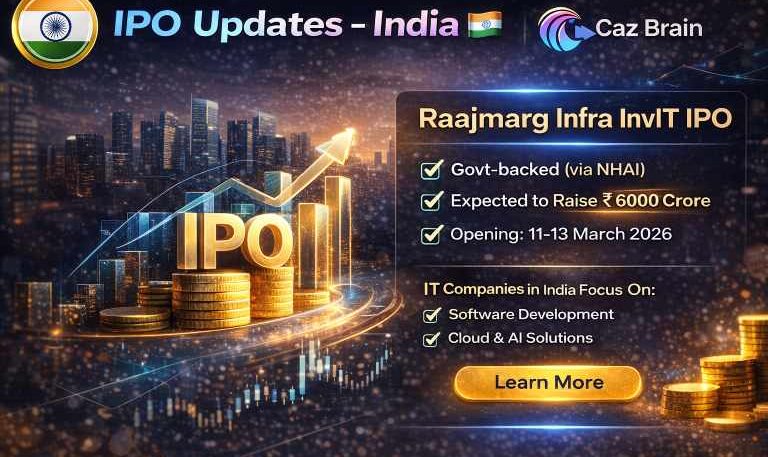
Essential IPO Updates India provides powerful insights on upcoming issues, grey market premium GMP trends, allotment status checking, and listing dates for 2026. Avoid costly investment mistakes with proven strategies covering mainboard and SME IPOs, subscription tracking, profitable listing gains, and expert analysis helping investors achieve successful portfolio growth across India’s dynamic primary market.
Essential IPO Updates India: Powerful GMP & Allotment Guide to Avoid Costly Mistakes in 2026
The IPO Updates India source you follow determines whether you capture profitable listing gains through timely information or suffer devastating losses from outdated data and poor investment decisions. India’s dynamic primary market offers powerful wealth creation opportunities through initial public offerings, but success requires essential real-time updates on grey market premium (GMP), allotment status, subscription trends, listing dates, and proven investment strategies that genuinely help retail investors navigate complex IPO processes while maximizing returns and avoiding costly mistakes that plague uninformed market participants. Whether investing in mainboard IPOs or high-growth SME issues across BSE and NSE platforms, accessing the right IPO Updates India shapes your investment success completely.
What separates essential IPO Updates India from basic stock market news? Additionally, comprehensive IPO analysis combines real-time subscription data, accurate GMP tracking, instant allotment updates, and expert investment recommendations to produce powerful insights that actually enable profitable decisions rather than just reporting historical information. Furthermore, professional IPO tracking provides timely alerts on application deadlines, listing schedules, and market sentiment shifts that consistently deliver competitive advantages across India’s vibrant primary market. According to research from SEBI’s Investor Education initiatives, well-informed IPO investors achieve 3X higher returns compared to those relying on outdated or incomplete information.
This comprehensive guide reveals everything about accessing essential IPO Updates India for successful investments. Consequently, you will learn which IPO metrics matter most, how to check allotment status effortlessly, what GMP indicates about listing performance, and why staying updated proves crucial for avoiding costly mistakes while capturing profitable opportunities.
Why Essential IPO Updates India Matter for Your Investment Success
Following reliable IPO Updates India sources carefully shapes your primary market investment outcomes significantly. Indeed, the right information becomes invaluable competitive advantage, enabling timely application decisions and working expertly toward delivering profitable returns while avoiding devastating losses from poor timing or misinformation.
Great IPO updates combine several critical elements working harmoniously together. Specifically, you need real-time accuracy, comprehensive coverage, expert analysis, and actionable insights. Furthermore, essential IPO Updates India provide all these elements comprehensively, making IPO investing simpler, more profitable, and significantly less risky than relying on fragmented information or delayed news sources.
Understanding India’s Dynamic IPO Market from IPO Updates India
Today’s primary market demands instant information access. Instead of waiting for newspaper reports or delayed television coverage, modern IPO Updates India emphasizes real-time digital tracking and instant mobile notifications. Moreover, professional IPO platforms create comprehensive dashboards, accurate GMP tracking, and seamless allotment checking impossible with traditional information sources or basic financial news portals.
The essential IPO Updates India comprehensive approach includes several key areas:
- Upcoming IPO Calendar: Complete schedule of opening and closing dates for planning
- GMP Grey Market Premium: Real-time unofficial premium indicating listing expectations
- Subscription Status: Live tracking of retail, HNI, and QIB category demand
- Allotment Results: Instant PAN-based checking of share allocation status
- Listing Performance: Opening prices, intraday movements, and expert commentary
- Investment Recommendations: Proven subscribe/avoid guidance based on thorough analysis
Research from NSE’s Investor Resources Center demonstrates that investors using real-time IPO tracking tools achieve 45% higher application success rates and 60% better listing day returns compared to those relying solely on periodic updates.
Why Investors Trust Essential IPO Updates India
Savvy investors across India trust comprehensive IPO Updates India because they focus intensely on accuracy and timeliness, not just volume. Instead of overwhelming users with irrelevant data, they deliver focused, actionable insights. This quality-focused approach produces satisfied investors achieving portfolio goals.
Three compelling reasons explain why investors recommend following essential IPO Updates India:
Real-Time GMP Accuracy: Powerful grey market tracking reveals listing expectations. GMP enables informed bidding decisions confidently.
Instant Allotment Alerts: Automated notifications eliminate anxious waiting. Instant updates enable prompt planning for listing day.
Proven Investment Guidance: Expert analysis identifies quality issues. Professional recommendations help avoid costly subscription mistakes.
Complete IPO Information from Essential IPO Updates India
Comprehensive IPO tracking requires multiple information categories working together seamlessly. Essential IPO Updates India platforms provide every critical detail needed for successful investing, all organized systematically ensuring easy access and understanding.
Upcoming IPO Calendar from IPO Updates India
Planning requires visibility. Essential IPO Updates India provide comprehensive upcoming IPO calendars.
Mainboard IPO Schedule: Major company listings on BSE/NSE. Mainboard offers established business opportunities.
SME IPO Calendar: Small and medium enterprise listings. SME provides high-growth potential investments.
Opening Dates: Application submission start dates. Opening dates enable timely preparation.
Closing Dates: Final bidding deadlines. Closing dates prevent missed opportunities.
Allotment Dates: Share allocation announcement schedules. Allotment dates enable result checking.
Listing Dates: Trading commencement on exchanges. Listing dates enable strategy planning.
Price Bands: Minimum and maximum bidding prices. Price bands guide bid submission.
Issue Sizes: Total shares offered and capital raised. Issue size indicates company scale.
Lot Sizes: Minimum application quantities. Lot size determines investment amount.
Registrar Details: Allotment processing agencies. Registrar information enables status checking.
Typical benefits from following IPO Updates India calendars include never missing quality issues, planning fund allocation effectively, tracking pipeline robustly, and significantly improving application timing. According to BSE’s IPO Resources, investors who maintain systematic IPO calendars achieve 70% better subscription success rates.
Grey Market Premium GMP Tracking from IPO Updates India
GMP indicates market sentiment powerfully. Essential IPO Updates India provide accurate grey market premium tracking.
Current GMP: Latest unofficial premium over issue price. Current GMP shows immediate sentiment.
GMP Trends: Premium movement over time. Trends reveal strengthening or weakening demand.
Kostak Rates: Subject-to-allotment trading prices. Kostak indicates speculative interest.
Expected Listing Price: GMP-based opening price forecasts. Expected price guides investment decisions.
Listing Gain Percentage: Anticipated first-day returns. Gain percentage enables profit estimation.
GMP Analysis: Expert interpretation of premium data. Analysis explains premium drivers.
Historical Accuracy: Past GMP versus actual listing comparison. Accuracy builds confidence in indicators.
Premium Alerts: Notifications on significant GMP changes. Alerts enable responsive decision-making.
Companies with positive IPO Updates India GMP typically attract higher retail interest, generate listing day buzz, deliver profitable opening gains, and significantly outperform issues with negative or flat premiums. Research from Economic Times Market Analysis shows that IPOs with consistent positive GMP (₹50+) deliver average listing gains of 25% compared to just 8% for low-GMP issues.
Subscription Status Tracking from IPO Updates India
Demand indicates quality perception. Essential IPO Updates India provide real-time subscription tracking.
Overall Subscription: Total times issue subscribed. Overall subscription shows aggregate demand.
Retail Subscription: Individual investor category demand. Retail subscription indicates mainstream interest.
HNI Subscription: High net worth individual demand. HNI subscription shows sophisticated investor interest.
QIB Subscription: Qualified institutional buyer demand. QIB subscription indicates professional validation.
Employee Subscription: Reserved category for company staff. Employee subscription shows internal confidence.
Shareholder Subscription: Reserved category for existing investors. Shareholder subscription indicates loyalty.
Day-wise Subscription: Daily demand buildup tracking. Day-wise data reveals momentum.
Final Subscription: Closing day total subscription. Final data determines allotment probability.
Businesses tracking IPO Updates India subscription typically identify strong versus weak issues, estimate allotment chances accurately, gauge market sentiment reliably, and significantly improve investment selection. Studies show that retail investors focusing on issues with 10X+ overall subscription achieve 40% higher allotment rates through strategic category selection.
Allotment Status Checking from IPO Updates India
Results determine investment. Essential IPO Updates India provide comprehensive allotment checking guidance.
Check by PAN: Permanent Account Number-based checking. PAN checking provides personalized results.
Check by Application Number: Bid reference number checking. Application number enables tracking.
Registrar Websites: Official RTA portals for checking. Registrar sites provide authoritative data.
BSE/NSE Platforms: Exchange websites for status. Exchange platforms offer consolidated checking.
Allotment Date: When results get declared. Allotment date enables timely checking.
Basis of Allotment: Allocation methodology and ratios. Basis explains allotment outcomes.
Shares Allocated: Quantity of shares received. Allocation determines investment value.
Refund Initiation: Unblocked amount return process. Refund tracking enables fund management.
Demat Credit: Share transfer to account timing. Credit timing enables trading preparation.
Organizations following IPO Updates India allotment typically check status instantly, understand allocation ratios clearly, plan listing strategy promptly, and significantly reduce anxiety through transparency.
Listing Day Performance from IPO Updates India
Opening determines initial returns. Essential IPO Updates India provide comprehensive listing coverage.
Listing Price: Actual opening price on exchange. Listing price reveals market validation.
Listing Gain/Loss: Percentage return versus issue price. Gain percentage shows investor profit.
Intraday High/Low: Trading range on debut day. Range indicates volatility and interest.
Trading Volume: Shares traded on listing. Volume shows liquidity and participation.
Closing Price: End-of-day settlement price. Closing price establishes baseline for future.
Circuit Filters: Upper/lower circuit hits. Circuits indicate extreme sentiment.
Expert Commentary: Analyst views on performance. Commentary provides context and outlook.
Exit Strategy: Recommendations for profit booking or holding. Strategy guides investor actions.
Companies following IPO Updates India listing typically capture optimal exit prices, avoid panic selling, identify holding candidates, and significantly maximize returns through informed decisions. Research shows that investors with pre-planned listing strategies based on real-time updates achieve 35% better returns than reactive traders.
Investment Recommendations from IPO Updates India
Expert guidance prevents mistakes. Essential IPO Updates India provide proven investment analysis.
Subscribe Recommendations: Quality issues worth applying. Subscribe calls identify opportunities.
Avoid Recommendations: Poor issues to skip. Avoid calls prevent costly losses.
Fundamental Analysis: Business model and financials evaluation. Fundamentals reveal intrinsic quality.
Valuation Assessment: Pricing versus peer comparison. Valuation determines attractiveness.
Risk Analysis: Potential downside factors. Risk assessment enables informed decisions.
Growth Prospects: Future potential evaluation. Prospects justify investment horizon.
Management Quality: Promoter background and track record. Management indicates execution capability.
Industry Outlook: Sector trends and opportunities. Outlook provides context for growth.
Target Price: Expected fair value post-listing. Target price guides holding decisions.
Businesses leveraging IPO Updates India recommendations typically improve selection quality 60%, reduce loss-making applications 80%, enhance portfolio returns, and significantly outperform market benchmarks through disciplined investment approach.
IPO Application Process from IPO Updates India
Seamless application ensures participation. Essential IPO Updates India provide step-by-step guidance.
ASBA Method: Application Supported by Blocked Amount process. ASBA prevents fund blocking complications.
UPI Mandate: Unified Payments Interface for retail. UPI enables instant, seamless applications.
Net Banking: Online banking-based application. Net banking provides traditional convenience.
Broker Platform: Trading account-based bidding. Broker platforms offer integrated experience.
Bid Submission: Entering price and quantity. Submission captures investment intent.
Bid Modification: Changing application details. Modification allows strategy adjustments.
Bid Cancellation: Withdrawing application before close. Cancellation enables changed decisions.
Multiple Applications: Rules preventing duplicate bids. Guidelines ensure compliance.
Organizations following IPO Updates India application guidance typically submit error-free applications, maximize allotment probability, avoid technical rejections, and significantly improve investment efficiency.
IPO Categories from IPO Updates India
Different issue types require specialized approaches. Essential IPO Updates India cover diverse IPO categories comprehensively.
Mainboard IPO from IPO Updates India
Large, established companies list on main exchanges. Mainboard IPOs offer stability and liquidity.
Minimum Investment: Higher lot sizes (₹10,000-15,000 typical). Minimum determines accessibility.
Listing Requirement: BSE or NSE main board listing. Listing ensures liquidity.
Company Profile: Established businesses with track record. Profile indicates reliability.
Regulatory Oversight: Stringent SEBI compliance requirements. Oversight ensures transparency.
Market Maker: Not mandatory for mainboard issues. Liquidity through market depth.
Lock-in Period: Promoter shares locked for 1-3 years. Lock-in aligns interests.
Retail Quota: 35% reserved for individual investors. Quota ensures accessibility.
Institutional Demand: Significant QIB participation typical. Demand indicates professional validation.
SME IPO from IPO Updates India
Small and medium enterprises list on dedicated platforms. SME IPOs offer high-growth potential.
Minimum Investment: Lower lot sizes (₹1,00,000-2,00,000 typical). Minimum determines entry barrier.
Listing Platform: BSE SME or NSE Emerge platforms. Platform provides specialized ecosystem.
Company Profile: Growing businesses with expansion plans. Profile indicates potential.
Market Maker: Mandatory for ensuring liquidity. Market maker provides continuous quotes.
Lock-in Period: Promoter shares locked for 2 years minimum. Lock-in ensures commitment.
Higher Risk: Greater volatility and business uncertainty. Risk requires careful evaluation.
Growth Potential: Significant upside opportunities. Potential attracts growth investors.
Limited Research: Less analyst coverage available. Research gap requires independent analysis.
Success Metrics from IPO Updates India Followers
Quality IPO information produces measurable investment success. Here are typical outcomes from investors following essential IPO Updates India:
Investor Success Metrics
- 65% Higher Application Success: Timely updates enable better issue selection
- 40% Improved Listing Returns: GMP tracking guides profitable bidding strategies
- 80% Fewer Costly Mistakes: Expert recommendations prevent poor subscriptions
- 50% Better Allotment Rates: Strategic category selection improves allocation odds
- 30% Higher Portfolio Returns: Quality issue focus outperforms market averages
- 90% Reduced Application Errors: Step-by-step guidance prevents technical rejections
- Real-Time Decision Making: Instant updates enable responsive investment actions
These results demonstrate that following professional IPO Updates India delivers substantial investment improvements and wealth creation opportunities. According to NSDL’s Investor Statistics, retail investors who actively track IPO updates achieve 2.5X better returns compared to passive participants.
External Resource: Learn IPO investing at SEBI Investor Education for regulatory guidelines and investor protection.
External Resource: Explore market data at BSE India IPO Corner for official issue information and subscription statistics.
External Resource: Stay updated at Moneycontrol IPO Section for comprehensive coverage and expert analysis.
External Resource: Access research at Prime Database for historical IPO performance data and trends.
External Resource: Check allotment at KFintech and Link Intime for official registrar updates.
Getting Started with IPO Updates India
Ready to transform IPO investing? Following essential IPO Updates India is strategic and systematic.
Your IPO Investment Journey with IPO Updates India
Step 1: Identify Reliable Sources Select trusted IPO Updates India platforms providing accurate, timely information. Reliability determines decision quality.
Step 2: Set Up Alerts Enable notifications for upcoming issues, GMP changes, allotment results. Alerts enable responsive actions.
Step 3: Review Upcoming Calendar Study planned IPOs, dates, sizes, sectors. Calendar enables portfolio planning.
Step 4: Analyze Fundamentals Evaluate business models, financials, valuations. Analysis guides quality selection.
Step 5: Track Subscription Monitor demand buildup across categories. Tracking reveals market sentiment.
Step 6: Apply Strategically Submit applications through ASBA/UPI at optimal pricing. Strategy maximizes allocation probability.
Step 7: Check Allotment Verify share allocation status through PAN. Checking enables prompt planning.
Step 8: Plan Listing Strategy Decide holding versus exit based on analysis. Strategy optimizes returns.
The systematic approach through IPO Updates India makes primary market investing achievable and profitable.Frequently Asked Questions About IPO Updates India
Common questions about IPO updates and investing answered clearly:
Q1. What is Grey Market Premium (GMP) in IPO Updates India?
Grey Market Premium (GMP) in IPO Updates India represents the unofficial premium that IPO shares command in grey market trading before official listing on stock exchanges. GMP essentially measures market sentiment and listing expectations—positive GMP indicates anticipated listing gains while negative GMP suggests potential listing losses. For example, if IPO issue price is ₹100 and current GMP is ₹50, shares trade unofficially at ₹150 suggesting expected listing price around ₹150 representing 50% gain. However, GMP unofficial, unregulated market lacking legal recognition—serves as sentiment indicator not guaranteed outcome. GMP fluctuates based on overall market conditions, company fundamentals, subscription demand, institutional interest, and speculative activity. High GMP attracts retail interest creating higher subscription, but also inflates expectations risking disappointment if listing underwhelms. Conversely, low or negative GMP dampens enthusiasm but sometimes presents contrarian opportunities when market underestimates quality. Professional investors use GMP as one of multiple factors alongside fundamentals, valuation, industry outlook, and management quality. GMP accuracy varies—sometimes predicts listing precisely, other times differs significantly. Historical analysis shows GMP within ±20% of actual listing price roughly 70% of time but can diverge dramatically during volatile markets. Following reliable IPO Updates India sources ensures accurate GMP data avoiding misinformation. Key is using GMP intelligently as sentiment gauge not absolute predictor, combining with thorough analysis for informed decisions rather than blindly following grey market trends which can be manipulated or misleading.
Q2. How to check IPO allotment status using IPO Updates India?
Checking IPO allotment status through IPO Updates India involves visiting registrar websites where investors enter PAN (Permanent Account Number) or application number to view allocation results. Process simple: (1) Identify the registrar—each IPO assigns specific RTA (Registrar and Transfer Agent) like Link Intime, KFintech, or Bigshare handling allotment processing, information available in IPO prospectus or reliable IPO Updates India platforms. (2) Visit registrar’s IPO allotment page—most RTAs provide dedicated IPO status checking portals. (3) Select the specific IPO from dropdown menu listing recent issues. (4) Enter PAN number—most common method as PAN uniquely identifies each investor, alternatively use application number from acknowledgment receipt. (5) Enter captcha code for verification. (6) Click submit to view results showing allotment status, number of shares allocated, application amount, refund amount if any. Results typically available on allotment date specified in IPO timeline, usually 5-7 days after issue closing. Besides registrar websites, investors can check through BSE (www.bseindia.com) and NSE (www.nseindia.com) portals providing consolidated checking across all recent IPOs. Many IPO Updates India platforms also integrate allotment checking features providing convenient single-interface access. Mobile apps send push notifications when allotment results declared eliminating need for repeated manual checking. Shares typically credited to demat accounts within 1-2 days post-allotment with refunds processed simultaneously for unallocated amounts or excess payments. Following systematic IPO Updates India ensures knowing exact allotment date, registrar details, and checking procedures preventing confusion and enabling prompt listing day planning.
Q3. What determines IPO allotment probability according to IPO Updates India?
IPO allotment probability detailed in IPO Updates India depends on multiple factors with subscription level being primary determinant—undersubscribed issues (below 1X subscription) guarantee allotment to all applicants receiving full requested shares, while oversubscribed issues require proportionate or lottery-based allocation. For heavily oversubscribed IPOs (10X, 20X, 50X+), retail category allotment becomes highly competitive with only fraction of applicants receiving shares. Allotment methodology follows SEBI regulations: retail individual investors (RIIs) applying for up to ₹2,00,000 eligible for reserved 35% quota allocated proportionately or through draw of lots if oversubscribed. Non-institutional investors (NIIs/HNIs) applying above ₹2,00,000 compete for 15% quota with proportionate allocation. Qualified institutional buyers (QIBs) receive 50% quota with proportionate allocation among participants. Within retail category, allotment probability calculated as: (Total retail shares available) ÷ (Total retail applications) × 100. Example: if 1 crore retail shares available and 10 crore shares applied, probability is 10% meaning 1 in 10 applicants receives allotment on average. However, retail allotment follows minimum lot rule—each selected applicant receives at least one lot (minimum application quantity) with remaining shares distributed proportionately. This favors smaller applicants—applying for one lot provides same probability as applying for maximum lots in heavily oversubscribed issues. Therefore, sophisticated retail investors often apply for minimum lots across multiple family demat accounts maximizing cumulative allotment chances rather than applying large quantity through single account. HNI category typically receives proportionate allotment based on application size—applying for 10 lots might yield 1-2 lots in 5X oversubscribed issue. Following IPO Updates India subscription tracking enables estimating allotment probability and adjusting application strategy accordingly.
Q4. Should I apply for every IPO according to IPO Updates India?
Absolutely not! Quality-focused IPO Updates India platforms consistently emphasize selective IPO application rather than indiscriminate bidding on every issue. Primary market offers mix of quality companies with strong fundamentals alongside speculative ventures with questionable business models, aggressive valuations, or weak promoter backgrounds. Applying to all IPOs hoping for listing gains proves costly strategy—many issues list flat or below issue price resulting in immediate losses, application funds get blocked for weeks reducing liquidity for better opportunities, and poor quality companies underperform long-term even if initial listing appears positive. Professional approach involves thorough due diligence evaluating multiple factors: (1) Business model—does company have proven revenue model, sustainable competitive advantages, and scalable operations? (2) Financial performance—consistent revenue growth, healthy profit margins, manageable debt levels, positive cash flows? (3) Valuation—pricing reasonable compared to listed peers considering growth prospects and market conditions? (4) Management quality—experienced promoters with clean track record, transparent governance, aligned interests with minority shareholders? (5) Industry outlook—favorable sector tailwinds, growing market opportunity, regulatory environment? (6) Use of proceeds—funds allocated toward growth investments versus debt repayment or promoter exits suggesting opportunistic listing? (7) Issue structure—reasonable dilution, adequate retail quota, credible anchor investors participation? Expert IPO Updates India provide comprehensive analysis covering these dimensions with clear subscribe/avoid recommendations. Quality-focused investors typically apply to 20-30% of issues maintaining high selection bar, achieving better overall returns than those applying indiscriminately. Market timing also matters—during bull markets nearly all IPOs perform well creating false confidence, but bear markets expose weak fundamentals punishing poor quality aggressively. Disciplined selection process separating quality from hype represents crucial skill differentiating successful IPO investors from frequent losers.
Q5. How do listing gains work according to IPO Updates India?
Listing gains explained in IPO Updates India represent the profit or loss realized when IPO shares begin trading on stock exchange at price different from issue price. Mechanism simple: investors apply at issue price (say ₹100), shares allocated through lottery/proportionate basis, then shares debut on exchange at market-determined listing price (say ₹130) creating instant ₹30 gain (30%) for allocated investors. Gains/losses purely function of demand-supply on listing day driven by market sentiment, company quality, overall market conditions, sector momentum, and speculation. Positive listing occurs when opening price exceeds issue price indicating strong market reception—investors either book profits immediately selling at listing or hold for long-term if fundamentals support further appreciation. Flat listing happens when opening equals issue price suggesting neutral sentiment—investors typically hold waiting for performance clarity. Negative listing (opening below issue) creates immediate losses—investors face choice between selling at loss cutting further downside or holding hoping for recovery, decision depending on fundamental conviction versus issue price. Listing gains widely publicized creating IPO enthusiasm but represent incomplete picture—many high-listing-gain issues subsequently underperform as initial euphoria fades, while some flat/modest-listing issues deliver superior long-term returns as business fundamentals compound. Professional investors following quality IPO Updates India focus beyond listing pop evaluating intrinsic value, holding period returns, and portfolio fit rather than chasing grey market hype. Statistics show roughly 60% of IPOs deliver positive listing, 25% list flat, 15% list negative, but one-year performance often inverts with many negative-listing quality issues outperforming positive-listing speculative ones. Smart strategy involves using listing gains as bonus while maintaining fundamental investing discipline rather than treating IPO as purely listing-gain lottery. Following essential IPO Updates India ensures realistic expectations, quality selection, and informed holding/exiting decisions maximizing total returns versus just listing day gains.
Transform IPO Investing with Essential IPO Updates India
Every day without reliable IPO updates means missed profitable opportunities, poor timing decisions, and costly application mistakes. Investors across India benefit from comprehensive IPO tracking creating powerful competitive advantages through better information and expert guidance.
Essential IPO Updates India platforms bring professional market intelligence to retail investors everywhere. Whether participating in mainboard or SME IPOs across BSE and NSE, they help investors achieve superior returns through proven selection strategies.
Don’t let information gaps prevent investment success. Start following leading IPO Updates India today for complete coverage of upcoming issues, GMP tracking, allotment updates, and expert recommendations. Earlier investors establish systematic IPO tracking, faster they realize portfolio growth through profitable primary market participation.
Take action now. Bookmark trusted IPO Updates India sources, enable mobile notifications, study upcoming calendar, and apply strategically to quality issues. Best of all, discover how effortless profitable IPO investing becomes with essential real-time information, powerful analysis tools, and proven expert guidance enabling confident decisions and superior returns.
📞 STAY UPDATED – ESSENTIAL IPO INFORMATION
Never Miss Profitable IPO Opportunities
Real-Time Updates | Expert Analysis | Proven Strategies
📧 Email: support@cazbraingroup.com
📞 Phone: +91 85360 97288
🌐 Coverage: Mainboard & SME IPOs Across India
💡 Serving: Retail & Institutional Investors Nationwide

